


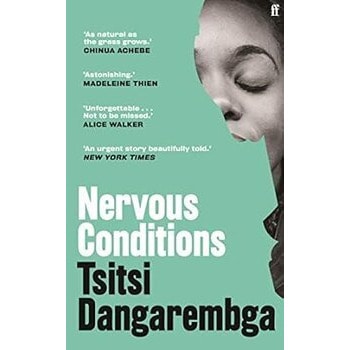
Nervous Conditions
*Nervous Conditions* by Tsitsi Dangarembga is a seminal novel that explores themes of colonialism, race, gender, and identity in post-colonial Zimbabwe. The story is narrated by Tambu, a young girl growing up in a rural village, who is determined to escape the limitations imposed by her gender and poverty. After the death of her brother, Tambu is given the opportunity to attend a mission school, where she becomes exposed to the complex realities of both African and Western cultures. The novel examines the struggles of women within a patriarchal society and the conflicts between traditional African values and Western influences. Through Tambu's coming-of-age journey, *Nervous Conditions* portrays the psychological and social pressures faced by individuals in a changing world. It is both a personal story of ambition and self-discovery, as well as a broader commentary on colonial legacy and gender inequality. Widely regarded as a classic of African literature, *Nervous Conditions* provides a powerful and nuanced perspective on the challenges of identity and empowerment in a post-colonial context.

Never Let Me Go
*Never Let Me Go* by Kazuo Ishiguro is a dystopian science fiction novel that explores themes of memory, identity, love, and the ethical implications of scientific advancements. The story is set in a seemingly idyllic English boarding school called Hailsham, where students are raised with a peculiar sense of purpose and a deep, unspoken awareness that their lives have a darker and more tragic meaning. The narrative follows Kathy, Ruth, and Tommy—three friends who slowly come to realize the true reason for their existence as "donors" in a society that harvests organs from them. As they grow older, they grapple with the limitations of their lives, the complex dynamics of their relationships, and the moral questions surrounding their fate. With its hauntingly subtle prose, Ishiguro crafts a powerful meditation on the fragility of human life and the poignancy of what it means to love and be loved. *Never Let Me Go* raises profound questions about humanity, ethics, and the value of life, all set against a quietly dystopian backdrop that lingers in the reader's mind long after the book is finished.
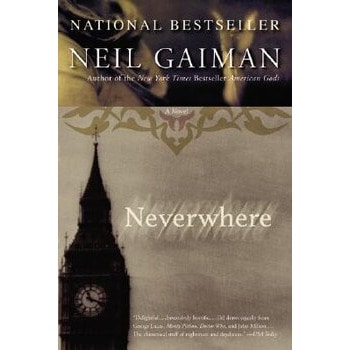
Neverwhere
*Neverwhere* by Neil Gaiman is a dark urban fantasy novel that takes readers on a journey through the mysterious and hidden world of London Below, a strange and dangerous parallel realm that exists beneath the streets of London. The story follows Richard Mayhew, an ordinary man whose life is turned upside down when he helps a young woman named Door, who is on the run from assassins. In doing so, he is thrust into a bizarre and magical world full of eccentric characters, including talking animals, monstrous creatures, and power-hungry figures. As Richard searches for a way back to his normal life, he must navigate the labyrinthine streets of London Below, confronting the dangers and mysteries of this underworld. *Neverwhere* is a captivating blend of fantasy, adventure, and horror, exploring themes of identity, belonging, and the divide between the ordinary and the extraordinary. Gaiman's signature mix of dark whimsy and philosophical depth makes this novel a compelling and immersive read for fans of imaginative fiction.
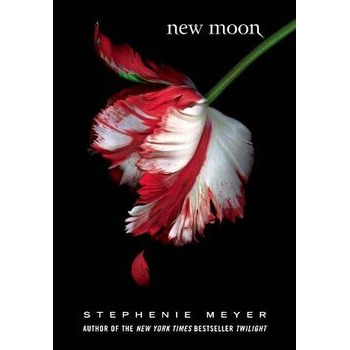
New Moon
*New Moon* by Stephenie Meyer is the second book in the *Twilight Saga*, continuing the story of Bella Swan and her complicated relationship with vampire Edward Cullen. After a traumatic event in the first book, Edward leaves Bella to protect her from the dangers of his vampire world, causing Bella to spiral into a deep depression. In her grief, Bella forms a close bond with her childhood friend, Jacob Black, who has his own secrets. As Bella and Jacob's friendship grows, she begins to discover a new, mysterious side to him, but she is still haunted by her love for Edward. Meanwhile, a series of dangerous events leads Bella to make reckless decisions in her search for a way to reconnect with Edward. *New Moon* explores themes of loss, love, and self-discovery, and sets the stage for the intense emotional and supernatural conflicts that unfold in the rest of the series. The novel is filled with romance, tension, and the dramatic contrast between Bella's desire for normalcy and her pull toward the extraordinary world of vampires.
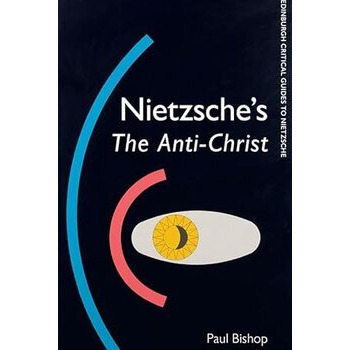
Nietzsche’S the Anti-Christ
*Nietzsche's *The Anti-Christ*** by Paul Bishop is a scholarly exploration and critical analysis of Friedrich Nietzsche's provocative and controversial work, *The Anti-Christ*, written in 1888. In this book, Nietzsche critiques Christianity and its influence on Western thought, condemning it as a system that he believes promotes weakness and subservience rather than strength and life-affirmation. He argues that Christian values, particularly those of humility and self-sacrifice, suppress individual greatness and the will to power. Bishop’s analysis of *The Anti-Christ* provides readers with a deeper understanding of Nietzsche’s philosophy, placing it within the broader context of his work and thought. Bishop discusses Nietzsche's anti-religious sentiments, his views on morality, and how they fit into his overall critique of modernity. This book is an essential resource for anyone studying Nietzsche's writings, offering insights into his radical critique of religion and the implications for contemporary philosophy, culture, and ethics.
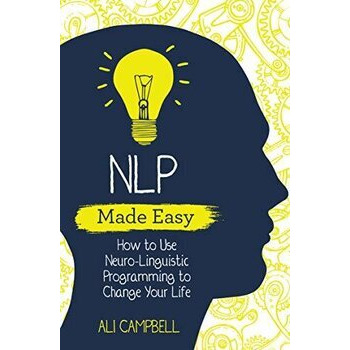
NLP Made Easy
*NLP Made Easy* by Ali Campbell is a practical guide to understanding and applying the principles of Neuro-Linguistic Programming (NLP), a psychological approach that explores the connection between language, behavior, and the mind. The book simplifies the concepts of NLP, making them accessible to beginners, and offers step-by-step instructions on how to use NLP techniques for personal development, improving communication, and achieving specific goals. Campbell covers various NLP tools, such as reframing, anchoring, and pattern recognition, and demonstrates how they can be used to change limiting beliefs, overcome fears, and enhance self-confidence. The book also offers tips for improving relationships and gaining clarity in decision-making. *NLP Made Easy* is designed to be a user-friendly introduction for anyone interested in learning how to apply NLP techniques in everyday life to create positive change and achieve personal success.

No Exit
*No Exit* by Taylor Adams is a gripping psychological thriller that follows Darby Thorne, a college student who is stranded at a remote highway rest stop during a snowstorm. While trying to find shelter, Darby discovers a young girl locked in the back of a van, and she quickly realizes that the situation is far more dangerous than she could have imagined. With no cell service and the storm trapping her with a group of strangers, Darby must use her wits and resourcefulness to figure out who the kidnapper is, while also trying to save the girl and escape. The novel is fast-paced, full of suspense, and packed with twists that keep the reader on edge. *No Exit* explores themes of morality, survival, and trust, as Darby finds herself in a life-or-death struggle with limited options. It’s a tense, claustrophobic thriller that will leave readers hooked until the very last page.

No Longer Human
*No Longer Human* by Osamu Dazai is a deeply emotional and introspective novel that explores themes of alienation, identity, and the human condition. The story is told through the eyes of Ōba Yōzō, a man who feels completely disconnected from society, unable to understand or relate to those around him. His inner turmoil is depicted in a series of journals and letters, which chart his struggles with self-worth, mental health, and his inability to conform to societal expectations. As Yōzō experiences a series of failed relationships, personal crises, and self-destructive behaviors, the novel delves into his sense of isolation and despair. *No Longer Human* is often seen as a modern existential classic, offering a stark and poignant look at the fragility of the human psyche. Dazai's work is considered a masterpiece of Japanese literature, blending psychological depth with philosophical reflections on what it means to be "human" in a world that often feels incomprehensible and alienating.

None of This Is True
*None of This Is True* by Lisa Jewell is a psychological thriller that explores the complexities of identity, truth, and deception. The story begins when Alix, a popular true-crime podcaster, meets a seemingly ordinary woman named Josie, who reveals that her life has been shaped by a series of mysterious and unsettling events. As Alix begins to delve deeper into Josie's past, she discovers disturbing secrets that suggest Josie’s life is far from what it seems. The narrative alternates between the perspectives of Alix and Josie, gradually revealing hidden motives, lies, and betrayals. As the tension builds, the book questions the reliability of memory and the boundaries between fact and fiction. *None of This Is True* is a suspenseful, twist-laden exploration of how far people are willing to go to conceal or manipulate the truth, and how the search for answers can lead to dangerous consequences.
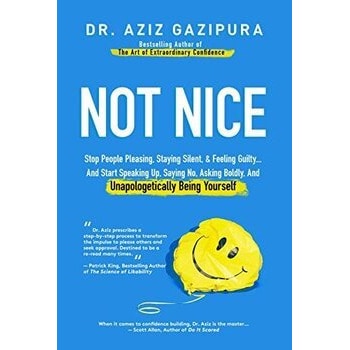
Not Nice
*Not Nice* by Aziz Gazipura is a self-help book that focuses on helping readers break free from the constraints of people-pleasing behavior and learn how to assert themselves more effectively in their personal and professional lives. Gazipura argues that being overly "nice" — avoiding conflict, suppressing your own needs, and trying to please everyone — can be damaging and limiting, leading to resentment, burnout, and a lack of fulfillment. The book offers practical strategies for developing healthy boundaries, embracing authenticity, and finding the courage to speak up, say no, and stand your ground without feeling guilty. Drawing on psychology and his own experiences as a therapist, Gazipura provides actionable advice for building self-confidence and achieving more satisfying relationships by overcoming the fear of disapproval. *Not Nice* encourages readers to embrace their true selves, challenge their fears, and take charge of their lives by rejecting the idea that "being nice" is always the best approach.

On Earth We’re Briefly Gorgeous
*On Earth We're Briefly Gorgeous* by Ocean Vuong is a poignant and beautifully written novel that explores themes of identity, love, trauma, and the immigrant experience. The story is told through a letter from Little Dog, a young Vietnamese-American man, to his mother, who cannot read. As he reflects on his past, Little Dog recounts his difficult childhood in Connecticut, the complexities of his relationship with his mother, and his experiences of growing up as a gay man in an often hostile world. The novel delves into his family’s history, the legacy of war, and the emotional scars that shape their lives. Vuong's lyrical prose and intimate narrative voice create a deeply emotional and immersive reading experience, blending poetry and storytelling to capture the fragility and beauty of life. *On Earth We're Briefly Gorgeous* is a meditation on love, loss, and the search for belonging, exploring the intersections of race, sexuality, and generational trauma. It’s a striking and sensitive debut that has earned widespread acclaim for its emotional depth and literary craftsmanship.
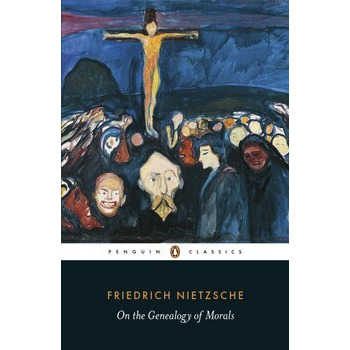
On the Genealogy of Morals
*On the Genealogy of Morals* by Friedrich Nietzsche is a critical philosophical work that explores the origins and development of moral values in Western society. Written as a series of three essays, Nietzsche examines the concepts of "good and evil," "good and bad," and "guilt" from a historical perspective, tracing their roots to ancient societies and their transformation through the rise of Christianity. Nietzsche challenges traditional moral frameworks, particularly the "slave morality" of Christianity, which he argues emerged as a reaction to the power and values of the aristocratic "master morality." He contends that traditional morality, with its emphasis on humility, self-sacrifice, and meekness, suppresses human creativity, strength, and vitality. Nietzsche introduces the concept of "ressentiment"—a form of deep-seated resentment that shapes moral systems—and critiques how it has influenced societal values. The work is a profound and often controversial examination of how power dynamics, social structures, and historical events have shaped our understanding of ethics and morality. *On the Genealogy of Morals* is a foundational text in Nietzsche’s philosophy, offering a radical rethinking of morality that continues to influence modern philosophical, cultural, and ethical debates.